A stick can be a bridge, a wand, a measuring tool or the beginning of an elaborate story.
A puddle can become an experiment.
And a slightly awkward log that takes three attempts to climb can teach a child something no worksheet ever could: I didn’t manage it the first time, but I can try again.
That is the thinking behind Forest School Clapham experiences and outdoor learning more broadly. Children are not simply taken outside for a change of scenery. They are given time, space and encouragement to investigate the world with their whole bodies.
At The Willow Nursery in Clapham Old Town, outdoor learning forms part of an early years approach built around exploration, play and growing independence. Willow describes nature as a place where children can build resilience, solve problems and develop curiosity through first-hand experience.
In a city as busy as London, those opportunities can feel particularly valuable.
What Is Forest School Clapham and How Does It Work?
Forest School is easy to misunderstand.
It is not simply a nursery outing with wellies.
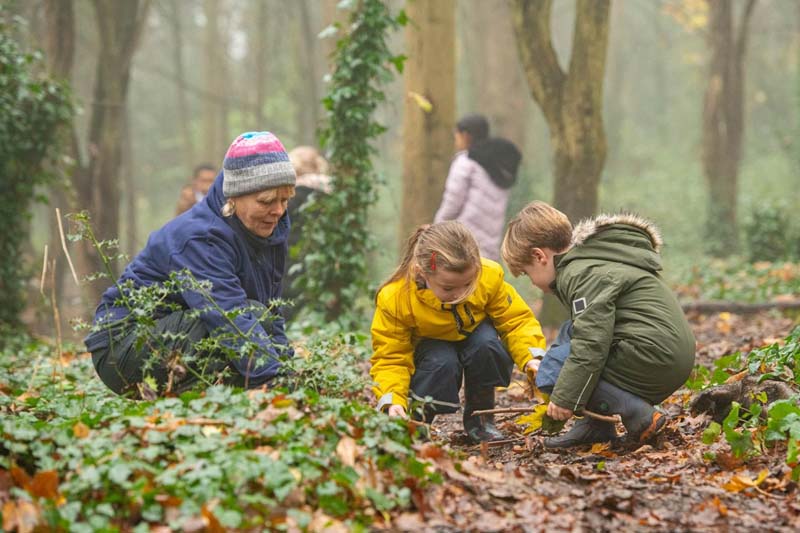
The Forest School Association describes Forest School as a child-centred learning process involving regular sessions in a woodland or natural environment. Children are encouraged to explore, play, make choices and encounter appropriate supported risks rather than following a rigid sequence of adult-led tasks.
That changes the role of the adult.
Instead of showing a child exactly what to make and exactly how to make it, practitioners can observe what catches their attention and create opportunities for that interest to develop.
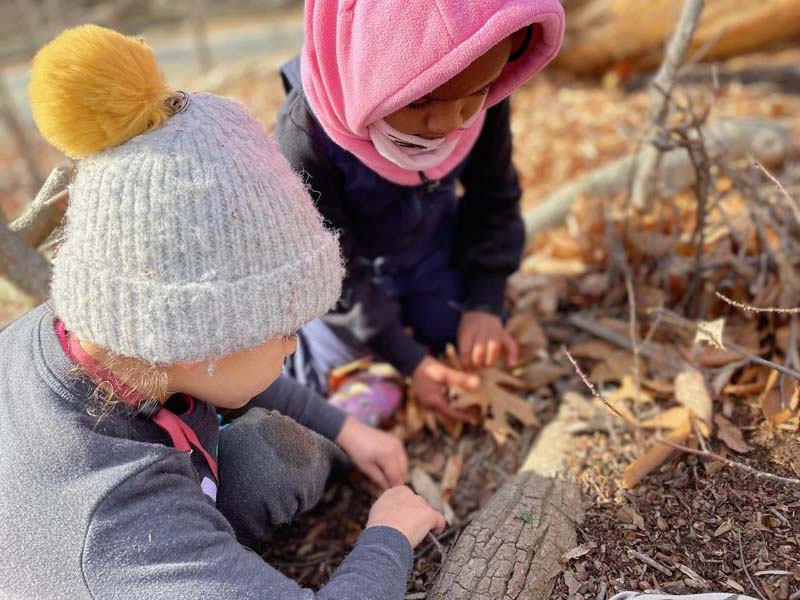
A child fascinated by leaves might begin sorting them.
Another might notice which ones feel different.
Someone else could decide they are ingredients for an imaginary café.
The learning has already started, even though nobody announced a lesson.
If you would like to see how this philosophy forms part of Willow’s provision, the nursery’s dedicated Forest School page explains how outdoor exploration is used to encourage independence, emotional strength, creativity and problem-solving.
The Outdoor Learning Benefits That Are Easy to Miss
Parents often notice the obvious benefit first: children get to move.
And that matters.
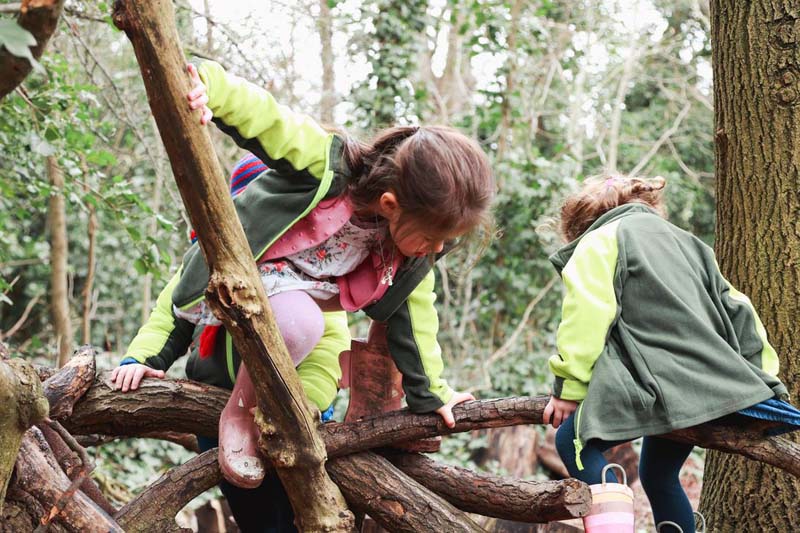
Outdoors, children have opportunities to climb, balance, bend, carry, reach, investigate and navigate spaces differently from the way they would indoors. Willow links these experiences with physical coordination and increasing self-reliance.
But many of the most interesting Outdoor learning benefits are less visible.
A child trying to move something too heavy has to rethink the problem.
A disagreement about who gets a particular stick becomes an exercise in communication.
Something that does not work the first time introduces frustration — and the possibility of trying another way.
Nature refuses to behave like a perfectly prepared classroom resource, and that unpredictability is useful.
Benefits for Motor Skills and Curiosity
Young children learn by doing.
When they move across uneven ground, reach for something interesting or carefully handle natural materials, they are developing physical awareness alongside curiosity.
The interesting thing is that the two often happen together.
A child does not think, “I am now practising coordination.”
They are trying to reach the leaf.
They are following the insect.
They want to know what is behind the tree.
The physical challenge exists because curiosity gives them a reason to attempt it.
That is one reason nature-based play London families encounter can feel so different from an activity where the result has already been decided by an adult.
Building Resilience One Small Challenge at a Time
Resilience sounds like a very grown-up word for early childhood.
In practice, it can begin with something tiny.
“I can’t get up there.”
“The tower fell down.”
“My hands got muddy.”
“That didn’t work.”
Outdoor play gives children frequent opportunities to meet manageable difficulties and decide what to do next. The Forest School Association specifically identifies resilient, confident and independent learners as part of the approach, alongside supported opportunities to encounter appropriate risk.
That does not mean leaving children to struggle alone.
It means creating enough space for them to discover that difficulty does not automatically mean failure.
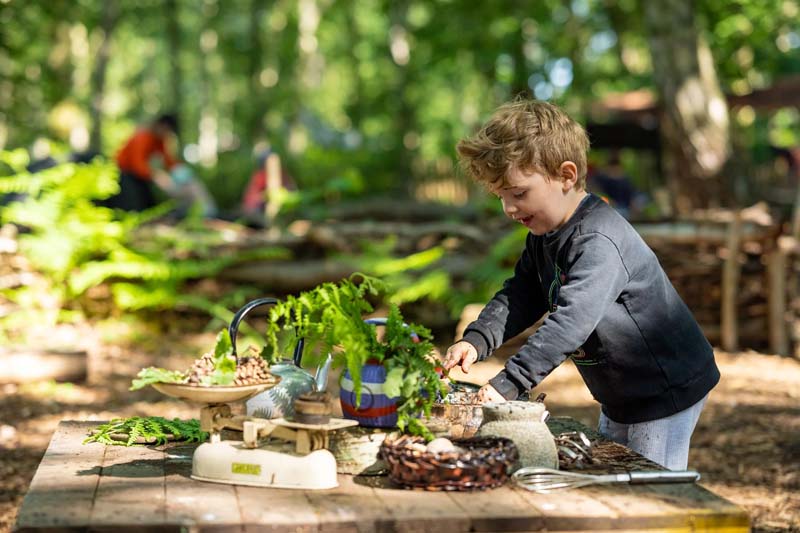
At Willow, this idea of building resilience appears through activities such as climbing, building and exploring natural materials — experiences where children can gradually feel more capable and resourceful.
The nursery’s article Why Forest School Learning Matters for Children explores this relationship between outdoor challenges, independence, communication and hands-on learning in more detail.
Experiential Learning vs. Traditional Classrooms
This does not need to become a battle between “indoors” and “outdoors”.
Children benefit from stories, songs, creative activities, conversations and carefully prepared indoor environments too.
The difference is what outdoor experiential learning adds.
Imagine teaching a child about rain from a picture.
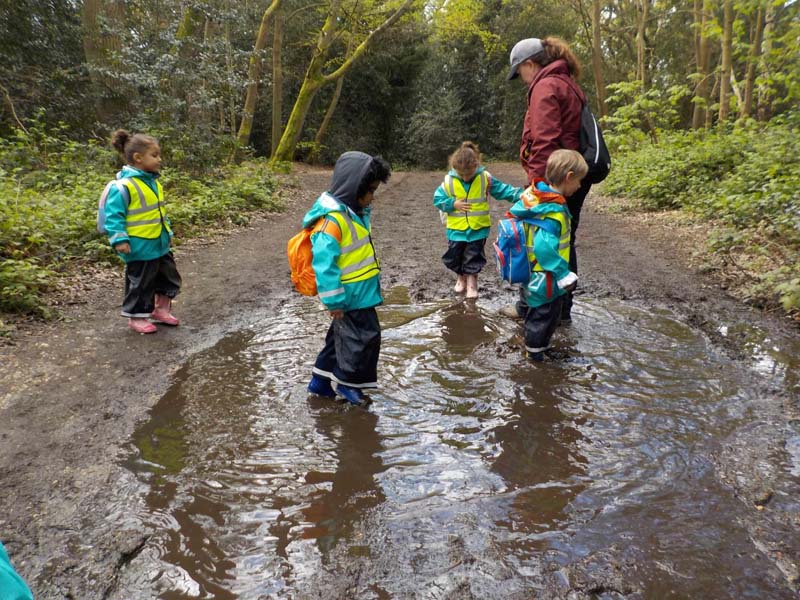
Now imagine them hearing it hit leaves, watching drops collect on a surface, noticing the soil becoming darker and discovering that one puddle is deeper than another.
Both experiences can introduce ideas.
Only one lets the child stand inside the question.
Forest School makes room for this kind of discovery.
Rather than separating subjects into neat boxes, one experience can involve language, physical development, imagination, problem-solving and social interaction at the same time.
For young children, that messiness can be exactly what makes learning meaningful.
What Might a Willow Outdoor Adventure Look Like?
Not every Forest School session needs a spectacular activity.
In fact, much of the value comes from children having enough time to notice, repeat and develop their own ideas.
Based on the outdoor experiences Willow describes, typical opportunities can include:
● Climbing and balancing while developing coordination and confidence.
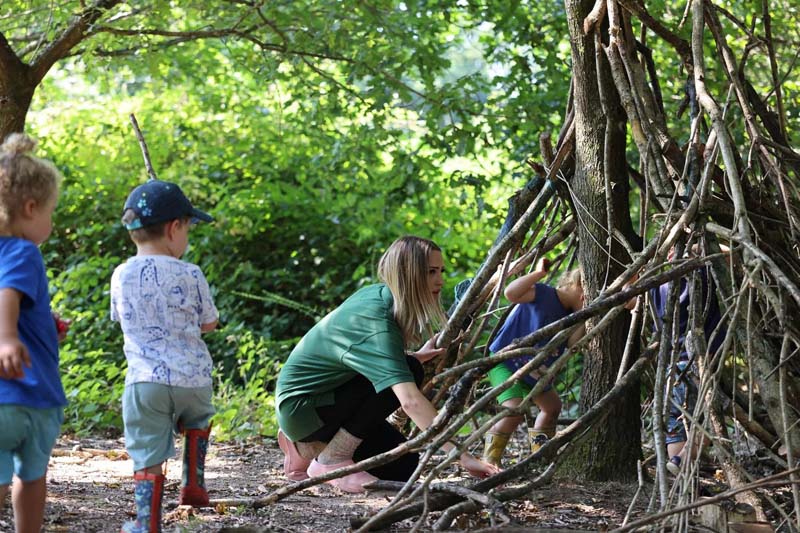
● Building and constructing with available materials.
● Observing nature and noticing changes in the environment.
● Exploring textures and natural materials through touch and investigation.
● Problem-solving together when an idea does not work immediately.
● Imaginative play inspired by whatever children discover around them.
● Moving freely outdoors and testing growing physical abilities.
The purpose is not to complete every activity on a checklist.
The child who spends twenty minutes examining one interesting object may be learning just as meaningfully as the child building something beside them.
Why Nature-Based Play London Children Experience Matters
London children grow up in one of the most stimulating cities in the world.
But city life can also mean traffic, pavements, busy schedules and plenty of time moving between carefully organised spaces.
Natural environments offer a different pace.
There are things adults have not arranged in advance.
Weather changes.
Leaves fall.
Materials feel different after rain.
Children have to observe rather than simply wait for the next instruction.
For parents exploring nature-based play London, that is an important distinction. Outdoor learning does not need to take children away from city life; it can help them build a relationship with nature while growing up within it.
At Willow, that outdoor dimension sits alongside the nursery’s wider educational approach in Clapham Old Town.
Where Outdoor Exploration Meets Bilingual Learning
A child does not divide Tuesday morning into “language development” at 10am and “physical development” at 10.30am.
Real learning overlaps.
A walk can involve new words. Building something together requires communication. Finding an unfamiliar object produces questions. An imaginary outdoor game creates an entire conversation.
That is why Forest School can sit naturally beside bilingual early education.
At The Willow Nursery, English-Spanish exposure and outdoor exploration are both part of the wider nursery experience; Willow specifically describes its Forest School adventures as complementing language learning. Parents who would like to see how these elements come together can explore the Bilingual English-Spanish Nursery in Clapham page and learn more about everyday immersion through play, music, routines and outdoor experiences.
Frequently Asked Questions About Forest School Clapham
Is Forest School just outdoor play?
Outdoor play is an important part of it, but Forest School has a broader educational philosophy. It involves regular experiences in natural environments, child-led exploration, hands-on learning and opportunities to develop confidence, independence and resilience.
What do young children learn through Forest School?
Outdoor experiences can support physical coordination, problem-solving, communication, creativity and independence. Children can also develop curiosity about nature by investigating the environment directly rather than only learning about it through pictures or explanations.
Does Forest School happen only in good weather?
Outdoor learning is about building an ongoing relationship with the natural world rather than waiting for one perfect sunny day. What children notice and experience changes with the seasons and conditions, although individual sessions must always be managed appropriately and safely.
Can Forest School complement bilingual education?
Yes. Outdoor play naturally creates opportunities for conversation, questions, storytelling and shared problem-solving. At Willow, Forest School forms part of the same nursery experience as natural English-Spanish immersion.
Some Lessons Need Mud on Their Shoes
Childhood does not need every learning moment to look educational from the outside.
Sometimes learning looks like carrying a branch.
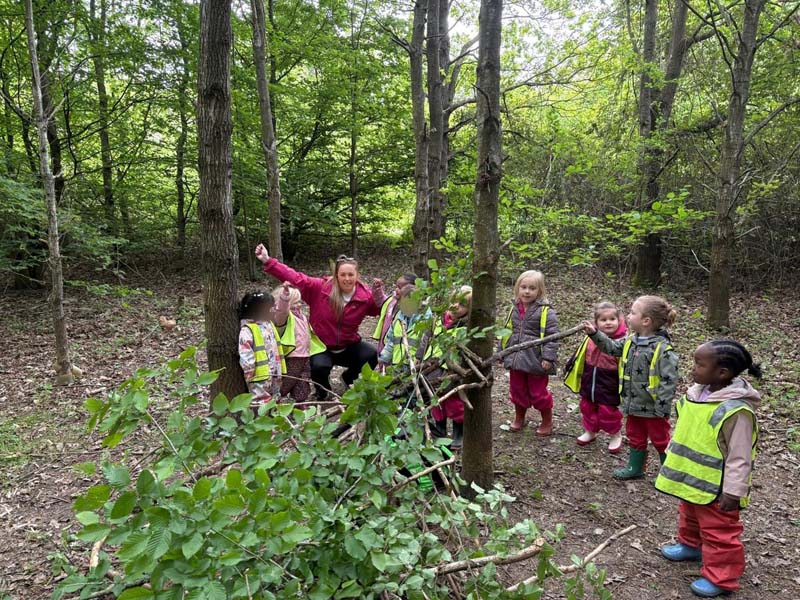
Sometimes it sounds like two children negotiating how to build something together.
Sometimes it involves getting something wrong, trying again and discovering that the second attempt works.
Those are some of the most valuable Outdoor learning benefits.
Forest School creates room for curiosity, movement and building resilience through experiences children can actually touch, test and remember.
And in the heart of SW4, that means nature does not have to be somewhere children visit occasionally.
It can become part of how they learn about themselves and the world around them.