
A child does not experience language as a grammar exercise. At first, it is a familiar greeting, a song at tidy-up time or a warm voice offering reassurance. Early immersion feels natural because language arrives through relationships and everyday life.
For families considering a Bilingual nursery London setting, the important question is not whether a child can memorise Spanish vocabulary. It is whether they can develop a comfortable relationship with two languages while feeling safe enough to play, communicate and be themselves.
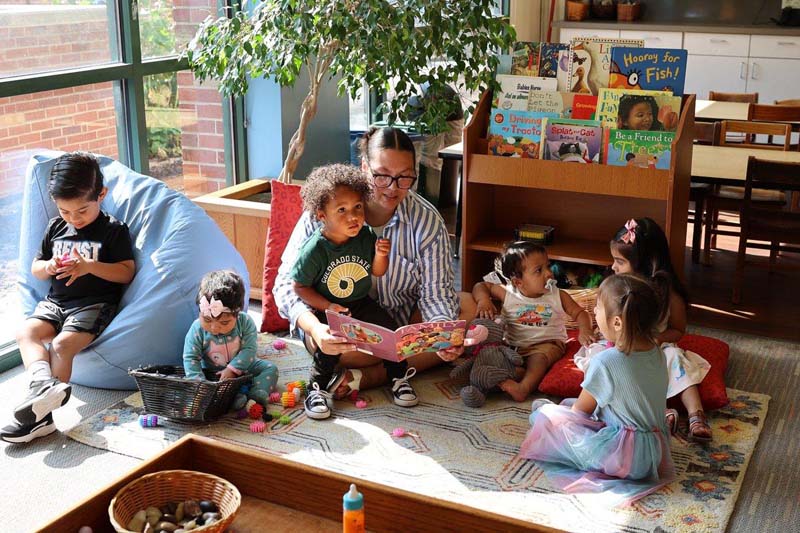
Why choose a Bilingual nursery London families can grow with?
Bilingual education gives children more than a second set of words. It offers another way to listen, connect and notice the world. English may be the language they hear most in the wider community, while Spanish becomes part of meaningful moments with educators, friends, stories and songs.
Strong early experiences are not built around performance. Children should not feel constantly corrected or expected to translate on demand. They need regular opportunities to hear useful language in context and respond in whatever way feels manageable.
Willow’s Bilingual English-Spanish Nursery in Clapham page explains how both languages are woven into play, music, storytelling and daily routines instead of being treated as isolated classroom subjects.
The science of natural learning: pressure-free immersion
Young children learn language through repeated, socially meaningful interaction. Research reviews emphasise that both the quantity and quality of exposure matter, especially when children can listen and respond to real people rather than passively receiving language from a screen.
That makes a Spanish immersion nursery different from an occasional lesson. Spanish does not appear for a list of colours and then disappear. Familiar words return during songs, play, mealtimes, movement and conversation. Meaning becomes clearer because the language is attached to something a child can see, feel or do.
There is also room for silence. Some children listen for weeks before experimenting with sounds. Others repeat a chorus immediately but take longer to use Spanish spontaneously. Confidence often appears when adults remove the pressure to demonstrate what has been learnt.
Parents can explore the subject further in Willow’s article about why bilingual education benefits children from an early age, which considers communication, cultural awareness and intuitive learning through play.
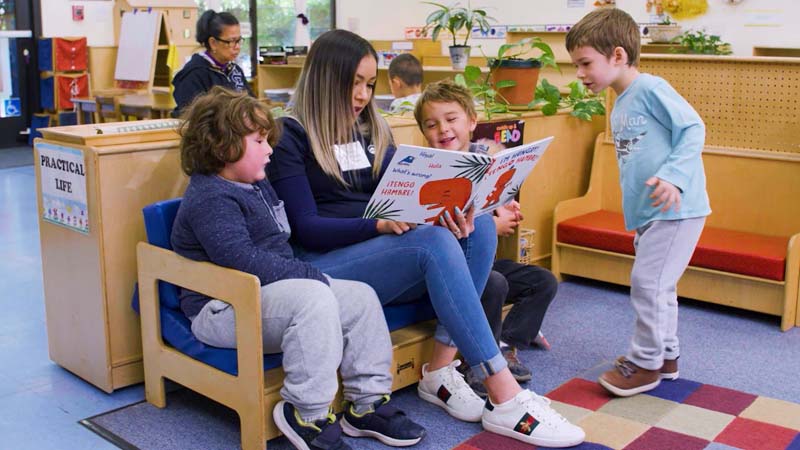
The benefits of bilingualism beyond vocabulary
Children begin to notice that people may express the same idea differently. This can encourage curiosity about tone, facial expression, context and the listener’s needs.
Research has found possible social advantages in areas such as understanding another person’s perspective. However, claims that bilingualism automatically makes every child cognitively superior should be treated carefully.
A large meta-analysis found that executive-function advantages were small, variable and no longer clear after adjusting for publication bias. In other words, speaking two languages is valuable, but it should not be presented as a guaranteed route to greater intelligence or better academic results.
The most dependable benefits of bilingualism are wonderfully practical. Children gain access to another language, more people, additional stories and a wider cultural landscape. They may communicate with relatives, form friendships across language backgrounds and see linguistic differences as normal rather than intimidating.
Cognitive and social advantages as children approach Year 1
As children move towards Year 1, classrooms ask them to listen in groups, follow changing instructions, explain ideas and work with classmates from different backgrounds.
Early English-Spanish learning can support these foundations by giving children experience in reading context and remaining engaged when every word is not immediately familiar.
A bilingual background does not guarantee stronger grades or effortless fluency. What it can provide is experience: listening closely, trying another way to communicate and discovering that uncertainty is temporary.
This can also have a social value. A child who regularly hears two languages used warmly may become more open to unfamiliar accents and more patient with a classmate searching for a word. Children also learn that home languages belong in educational spaces and deserve respect.
Outdoor learning can make language especially memorable. Willow’s article on why Forest School learning matters for children explains how practical exploration supports independence and communication. In a bilingual setting, nature becomes a living vocabulary: leaves can be counted, textures described and discoveries shared in both languages.
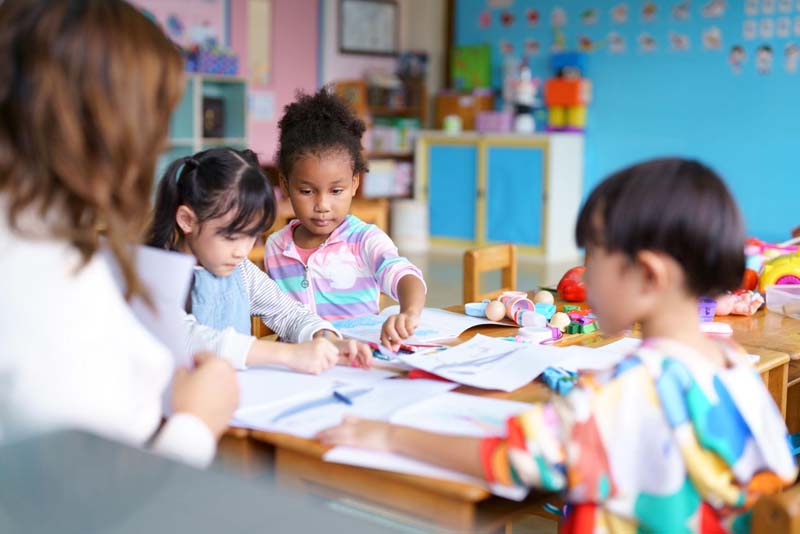
Common myths about language confusion
The belief that two languages confuse young children remains surprisingly common. Yet research shows that bilingual infants can distinguish between languages, while mixing words is a normal feature of bilingual development rather than evidence of confusion.
A child might say, “Look, un perro!” because “perro” is the word available most quickly. This is resourceful communication, not a mistake. With growing vocabulary and experience, children become increasingly skilled at choosing the language that suits the person and situation.
Bilingual exposure does not cause language disorders. Some bilingual children, like some monolingual children, may experience speech or language difficulties. Genuine concerns should be assessed across both languages by a professional familiar with bilingual development rather than assuming Spanish exposure is responsible.
How Willow integrates Spanish daily
At Willow, English-Spanish learning is part of ordinary nursery life. Children encounter Spanish through:
● Warm greetings and familiar phrases.
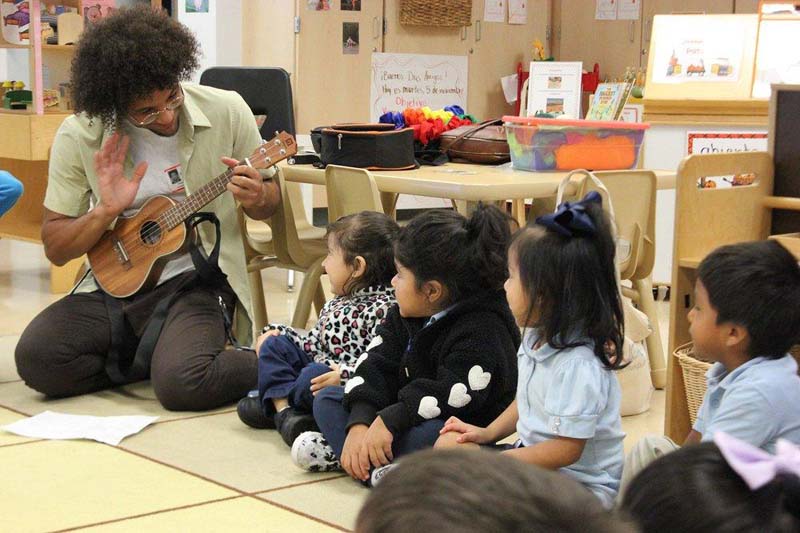
● Songs, rhythm and movement.
● Stories supported by pictures and repetition.
● Child-led play connected to real interests.
● Routines such as tidying and sharing meals.
● Creative activities involving colours, shapes and counting.
● Outdoor exploration with practical vocabulary.
● Gentle conversations suited to each child’s confidence.
Willow’s approach focuses on meaningful exposure through everyday experiences rather than rigid instruction. Spanish appears in situations that children can understand and enjoy, helping language become part of their nursery relationships and routines.
Consistency matters more than instant fluency. Regular, enjoyable contact helps Spanish become familiar: something to explore, not a test to pass.
Frequently asked questions
Does my child need to speak Spanish before joining?
No. A Spanish immersion nursery can welcome complete beginners as well as children who already hear Spanish at home. Educators use gestures, routines, pictures and repetition to make communication accessible.
Will Spanish slow down my child’s English?
Bilingual children may know different words in each language, so measuring English vocabulary alone can give an incomplete picture.
When their knowledge across both languages is considered, their combined conceptual vocabulary may be comparable with that of monolingual children.
What if nobody in our family speaks Spanish?
Continue using the language in which your family communicates most naturally and confidently. Songs, picture books and simple Spanish phrases can complement nursery exposure, but parents do not need to turn the home into a formal language classroom.
Is mixing English and Spanish a bad habit?
No. Mixing languages, sometimes known as code-switching, is common among bilingual speakers. It often shows that a child is using every communication tool available to express an idea.
How quickly will my child become bilingual?
There is no fixed timetable. Progress depends on age, personality, the amount of exposure and opportunities to interact.
Some children begin using Spanish words quickly, while others spend longer listening. The goal should be meaningful communication and growing confidence rather than comparison with another child.
A language journey built around belonging
The real gift of early immersion is not a perfectly rehearsed phrase. It is the feeling that another language belongs in a child’s world.
In the right Bilingual nursery London environment, children can encounter Spanish without losing the security of English. They can build relationships without fearing mistakes and carry their linguistic curiosity into school and later life.
Families interested in Willow’s bilingual approach can arrange a visit to experience how two languages become part of one warm, playful and welcoming nursery day.